Gap insurance pays the difference between what you still owe on a car loan or lease and what your standard auto policy pays out if the car is totaled or stolen. You need it when you owe more than the car is worth — and for many loans, that’s exactly the case in the first few years.
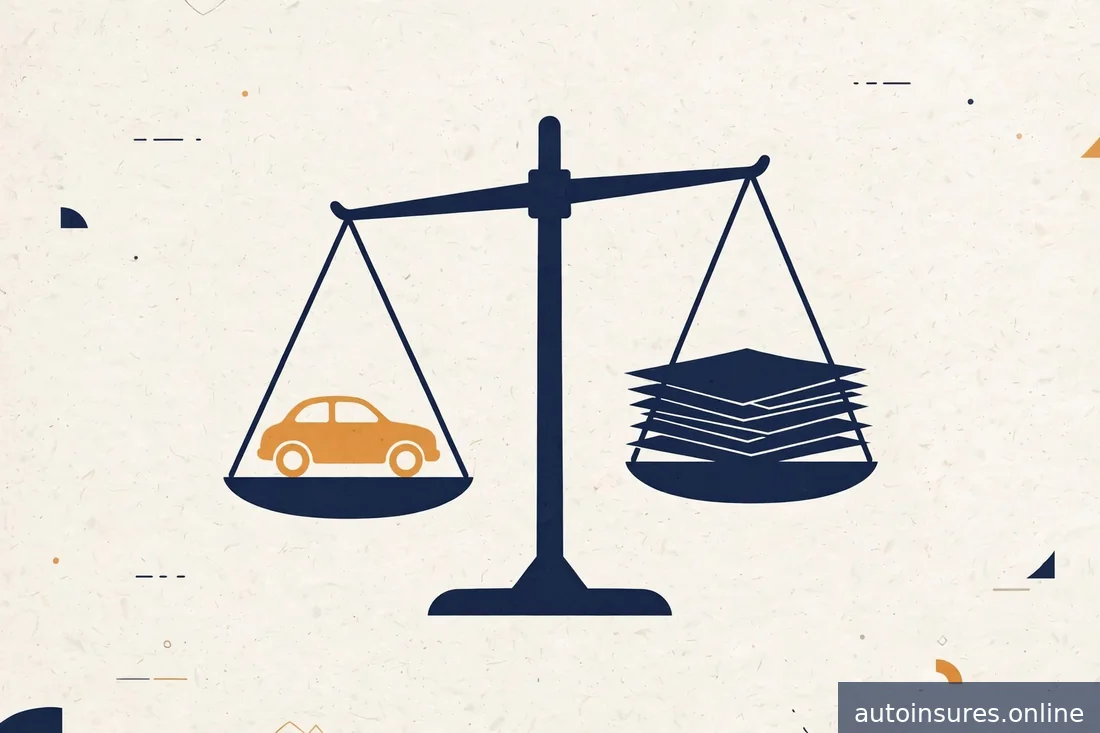
What gap insurance actually pays
Standard auto insurance pays a totaled or stolen car at its actual cash value (ACV) — what the car was worth the moment before the loss, accounting for depreciation. It does not pay what you owe on your loan.
Gap insurance covers that shortfall. The Consumer Financial Protection Bureau describes it plainly: GAP “is intended to cover the difference between the amount you owe on your auto loan and the amount the insurance company pays if your car is stolen or totaled,” because standard auto insurance only pays up to the value of the vehicle (CFPB).
A simple example: you owe $28,000 on your loan and your totaled car is valued at $24,000. Your collision coverage pays $24,000 (minus your deductible). Gap insurance covers the remaining $4,000 — the part you’d otherwise still owe the lender on a car you no longer have.
Note that gap is not a standalone product you buy in place of auto insurance. It only works alongside a standard policy that handles the underlying claim. If you carry only minimum liability, there’s no collision payout for your own car at all — which is one more reason to read our comparison of full coverage vs liability before financing a car.
The math: when a “gap” exists
New cars depreciate fastest in the first years of ownership while loan balances decline more slowly — especially with small down payments and long loan terms. That’s the setup for a gap. The size of your potential gap depends on three variables:
| Factor | Increases your gap risk | Decreases your gap risk |
|---|---|---|
| Down payment | Under 10% (or $0 down) | 20% or more |
| Loan term | 72–84 months | 48 months or less |
| Rolled-in debt | Negative equity from a trade-in added to the loan | Clean trade or no trade-in |
| Depreciation speed | New cars, luxury and EV models | Used cars bought near market value |
A quick self-test: subtract your car’s current market value from your current loan payoff amount. If the result is positive, you have a gap. Many drivers are surprised how large it is in years one through three of a typical loan.
This is also why leasing gets special treatment: most lease contracts build gap coverage in automatically, since the lessor owns the car and wants its residual protected. Always read the lease before buying a separate gap product — you may already be covered.
Who actually needs it (and who doesn’t)
Drivers in these situations often consider gap insurance:
- Small down payment, long loan. Zero-down or low-down financing with 72–84 month terms is the textbook gap scenario — the balance stays above the car’s value for years.
- Rolled-over negative equity. If you traded in a car you still owed money on and the dealer rolled that debt into the new loan, your starting balance is already above the car’s value.
- New or fast-depreciating vehicles. Cars that lose value quickly create larger gaps, faster.
And drivers in these situations often skip it:
- 20%+ down payment with a 48-month (or shorter) loan. Equity builds fast enough that a gap rarely opens.
- The car is paid off. No loan, no gap — the product literally can’t pay out.
- You owe far less than the car is worth. If you could absorb a total loss from savings or a short payoff, gap adds little.
- Your lease already includes it. Check the contract before paying twice.
Dealer gap vs insurer gap: the pricing caution
This is where gap insurance gets expensive in ways people don’t expect. You can usually buy gap from two places — the dealership (or lender) at signing, or your own auto insurer as a policy endorsement — and the purchase channel matters more than most buyers realize.
The CFPB flags the key mechanics: dealer-sold gap is typically rolled into the loan amount, which “will add to your total loan amount, which ultimately increases what you’ll pay in total interest over time.” In other words, you’re financing the coverage itself and paying interest on it. The CFPB also notes “the price of this product can vary greatly” and explicitly advises consumers to compare prices and coverage before buying (CFPB).
Practical steps before you sign anything in a finance office:
- Call your own insurer first. Ask what a gap (or “loan/lease payoff”) endorsement costs as an addition to your policy. You’ll then have a benchmark to compare against the dealer’s price.
- Watch for pressure. The CFPB says that in most situations, gap is optional — “you have the right to walk away” if a dealer or lender pressures you to buy add-on products. If you’re told gap is required to get the loan, ask where the contract says that; and if it truly is required, its cost must be included in the finance charge and reflected in the disclosed APR.
- Compare coverage terms, not just price. Some gap contracts cap the payout (for example, at a percentage of the car’s value), exclude rolled-over negative equity from a prior loan, don’t cover your deductible, or end before your loan term does.
What gap insurance does NOT cover
Gap is narrower than people assume. Read the contract for these common exclusions and limits:
- Your deductible. Many gap policies don’t cover the collision or comprehensive deductible subtracted from the underlying payout. Some do — check.
- Overdue payments and late fees. Amounts you were behind on generally aren’t covered.
- Rolled-over negative equity. Some contracts exclude the portion of the balance that came from a previous vehicle’s debt.
- Coverage windows. A gap policy may end after a set number of years even if your loan runs longer.
- Anything the underlying claim doesn’t pay. Gap only fills the hole left after the standard settlement. If your collision claim is denied, there’s no gap payout to supplement.
The underlying settlement itself is worth understanding: the NAIC warns that valuation guides are “only a guide,” and the insurer pays what your car was actually worth just before the loss, based on comparable vehicles in your area (NAIC Consumer Auto). In 2024 the average collision claim was $5,489 according to ISO data published by the Triple-I — and total-loss settlements follow the same ACV logic at larger scales (Triple-I). Our guide to collision vs comprehensive explains which coverage pays in which scenarios.
When and how to cancel
Gap insurance has a natural expiration date: the moment your loan balance drops below the car’s value, the product can no longer pay out — but you may still be paying for it. The CFPB is explicit here: you have the right to cancel these optional add-on products at any time, and you may be entitled to a refund of the unused portion if you sell, refinance, or prepay your loan (CFPB).
Set a reminder to check your loan-to-value position annually. If you bought gap through your insurer, it’s usually a simple endorsement removal. If you bought it through the dealer or lender, you’ll typically write to the lender or the gap administrator named in the contract — and confirm in writing that the cancellation was processed and any refund is on its way.
Dropping unneeded coverage is one of the simplest ways to lower what you pay. Our broader list of 15 legit ways to lower car insurance covers the rest of the audit.
- Gap insurance covers the shortfall between your loan balance and the car’s actual cash value after a total loss or theft.
- The gap is largest with small down payments, long loan terms, and rolled-over negative equity — check your own loan math.
- Dealer-sold gap is often financed into the loan (so you pay interest on it); get a quote from your insurer first and compare.
- Gap is optional in most situations, cancelable at any time, and refundable for unused portions if you sell, refinance, or prepay.
- Read the contract: deductibles, late payments, rolled-over debt, and coverage windows may be excluded.
Frequently asked questions
Is gap insurance required by law?
No. Gap insurance is not legally required in any state. However, many lease contracts require it (and often include it), and some lenders require it for high-risk loans with very low down payments. Check your own loan or lease paperwork rather than taking a salesperson’s word for it.
Does gap insurance cover my deductible?
Often not. Many gap contracts pay only the loan-to-value shortfall and leave the collision or comprehensive deductible to you. Some insurer-sold endorsements do cover it. This is one of the specific questions to ask before buying.
Can I buy gap insurance after I’ve already bought the car?
Usually, yes — most auto insurers will add a gap or loan/lease payoff endorsement to an existing policy, often with vehicle-age limits. Dealer-sold gap is typically offered at purchase, but insurer-sold coverage is the channel most drivers should compare first anyway.
What happens if my car is totaled and I don’t have gap insurance?
Your collision (or comprehensive, for theft) coverage pays the car’s actual cash value minus your deductible, and you remain responsible for any remaining loan balance. That’s the exact scenario where drivers who financed with little down end up making payments on a car they no longer drive.
This is general information, not financial advice — check your state’s insurance department for rules that apply to you.